Wednesday, September 22, 2010

Equi Nox: The Last Day of Summer

We had some serious summer weather earlier this month where it was so hot that Lorraine and I set up a table down in the studio (our basement) for several days so that we could work in the uncharacteristic (for here at least) heat wave.  But then, as it always does, the systems changed, it got cooler, and felt more like September.  I have even started to wear socks and shoes on occasion instead of my sandals, I heard the furnace come on one night, and when we look at the forecast now it is most likely to predict highs of 17 or 18, rather than the 33 or 34 we had less than three weeks ago.

So today, the last day of summer, was a treat, with sunny skies after some morning cloud, brisk southwest winds, and temperatures in the mid-20’s, except, as always with that wind, a little cooler along the coast.  That description does read rather like an Environment Canada report and does not do justice to the warm beneficence of today, the equinox, the day that the sun crosses the Equator (or, to be more truthful, the day the earth tilts in relation to the sun, and our northern hemisphere starts the long slide into winter).  It was a treat, a glorious day, and after doing some work in the morning we decided to head for Crystal Crescent for a celebratory picnic.

We weren’t the only ones, but the stretch of beach we stopped at was empty except for a little girl of two or three who was there with her dad, playing in and around the large castle and well he had made in the sand.  Others arrived on the beach, some with towels, though nobody went into the water except the dad who held his daughter so she could kick her feet in the waves, and still others hiked on out to the point or to the next beach, the one we have always called Cootes Cove or Mackerel Cove, but most people now know as The Nude Beach.

We didn’t bother going out there, but we did fly our kite after eating our sandwiches, and each of us learned how to maneuvre it well enough to keep it from crashing whenever the wind did a shift or a gust.

We also walked out to check out the gulls and cormorants on the rocks.

And we saw the seasonal asters, aka Michaelmas daisies (find out about Michaelmas and St. Michael, the great Archangel, here), harbingers of autumn reminding us that school is in and summer is really over.

Back at home I was walking in bare feet – after all, it is the last day of summer – to fill one of the bird feeders – after all, winter is coming – when I felt something cold on my ankle and saw a most beautiful spring peeper in the grass, the first I have ever seen.  It seemed a nice irony of the day that this tiny creature, this harbinger of spring that you always hear and almost never see, should be jumping across our lawn today and is in fact chirping outside the window tonight as I type this.

So it was a large day, and tonight is it, the autumn equinox, and the last day of this season, a nice end to a really nice summer.  This evening’s moon, a smidgen away from full, will herald autumn and harvest when it rises over the harbour tomorrow night, reminding us that the day has just become a little shorter than the night. 

Tuesday, September 21, 2010

Weeds Are a Problem


“Weeds are a problem.”  That was the opening line of an essay written by our boarder and good friend Phil when he was living with us while he completed his Master’s degree in botany.  He was struggling to find a way into the paper, and his solution, which is a tautology since a thing is called a weed only when it is perceived as a problem, did get him past the writer’s block and into the paper and eventually through his whole thesis.  And “Weeds are a problem” has become a signature phrase in our household ever since.

This year for me weeds have been a problem.  They have been present but easy to manage in the little herb and flower garden next to the walkway, but in the bigger picture, the larger environs we live in, they have been both present and often difficult.  The difficulty has been in part the fact that we have not really got to them to deal with them.  So they sprout and leaf out and flower and go to seed, taunting us with their problematic weedy presence.

One suggestion that makes sense to me is that it’s better to pull weeds after it has rained.  Unfortunately for us, but fortunately for the weeds, this has been a dry season.  We did get a reasonable soaking from Hurricane Earl a couple of weeks ago, but after he passed we were too busy putting our deck furniture back, waiting for the power to come on, and clearing up debris to think of pulling weeds.  However, we did get a steady and prolonged fall of rain on Friday – I know because I was in and out of it all morning – and there was a chance the weeds would let go more easily.

So yesterday I got to it.  I weeded around my tiny asparagus plants in the bed I am working to establish and then started to reclaim a section of my old vegetable garden now overrun with goldenrod, morning glory, and bracken ferns.  It was truly satisfying yanking bunches of goldenrod out of the ground and pulling up tangles of morning glory; they did come out more easily and completely because I was pulling them out of wet ground.  The bracken fern took more digging than pulling because their roots extend under the ground and break off, but I also got clear of a small invasion of them and had a substantial area mostly clear of weeds, at least the big ones.

The other satisfying thing was clearing a part of our driveway from plantain and other small weeds that persist on growing up through its several centimetres of gravel.  For this I used a nice little forked tool from Lee Valley that allowed me to loosen the gravel and more easily pull out the offending plants; in fact, it worked so well that I now have a wheelbarrow load of them to take down to the compost pile.

There is also a not-satisfying aspect to the weeding problem, and that is the comfrey.  The image above is a small comfrey plant I dug out yesterday, and there is much that I would like to say about it and the plague of comfrey, but unfortunately most of it is unsuitable for this medium.  However, when I started to investigate comfrey [aka Ass Ear, Assear, Beinwurz (Ger), Blackwort, Boneset, Bruisewort, Consolida, Consoude (Fr), Consound, Gum Plant, Healing Herb, Knitback, Knitbone, Nipbone, Okopnik (Russ), Salsify, Schwarzwurz (Ger), Slippery Root, Wallwort, Yalluc (Saxon)], I found that there is a great deal that one can say even in a public blog; as a result, my next post is likely to be “Weeds Are a Problem – The Comfrey Story”.  It’s an interesting one and a cautionary tale.  Watch for it.

Sunday, September 12, 2010

Pesto burgers there and here

Friday afternoons in Istanbul we usually left the school where we lived through the week and drove over to the European side. Crossing the bridge was always a treat for us because it meant we had left the work week behind and were heading for Ortaköy to spend the weekend in the studio.

One of our Friday night treats, once we had found a place to leave the car and carted our stuff into the studio and maybe had a bit of wine or a cold beer from the tekel, was to head for the waterfront for some supper at Sedir, our favourite restaurant in Ortaköy. For most of the years we went to Sedir there was neither beer nor wine available, perhaps because of its proximity to the famous seaside mosque, Büyük Mecidiye Camii (here’s a picture of it), but the atmosphere and the food were consistently great.

I thought of Sedir on Friday night after the first full (or almost full) week of school, as we talked about supper. We had wanted to spend a little time outside after getting home because Lorraine had been inside the classroom and the photo lab for too long, so we found squeegees and buckets, hooked up the borrowed pressure washer, and started to wash off the salt spray, shredded leaf bits, and pine needles that Hurricane Earl had stuck to our walls and windows last weekend. It was satisfying work and the view improved considerably, but it wasn’t very long before we decided we had done enough of that and it was time to think about eating.

What about burgers? I asked.

Sure, Lorraine said, can we make pesto burgers?

One of our favourite Friday night suppers at Sedir was their pesto burger. It was always a nicely done ground sirloin burger with a generous spread of good pesto on the bun, accompanied by a small dish of shredded, slightly caramelized onions and a side of fried potatoes cut in wedges – in Turkish they were sometimes called “apple-sliced potatoes” or “village potatoes” if I remember (and translated) correctly – and the usual dispensers of mayonnaise and ketchup. It was always a treat and a great way to start off our weekend.

So I told Lorraine we could make pesto burgers, I just needed to pick the basel, get out the food processor, chop up some good Turkish hazelnuts we bought in the spring at Ölmezler Kuruyemiş (Siz taze taze ve ucuz alın diye, biz ince eleyip sık dokuyoruz is what it says on the bag, meaning something like Because you want fresh fresh and not expensive, we weave thin and thick. Maybe one of my Turkish friends can give me a better translation – I certainly won’t bother with the gibberish that the online translator gave me), mix in some good olive oil and parmesan, and spread it generously on the bun.

It didn’t take long, and we soon had a nice jar of fresh pesto to go with the Angus burgers that sizzled on the barbecue. We didn’t have the cute little dish of onions or elma dilim potatoes, but we had great pesto burgers with a glass of wine and memories of those wonderful Friday night suppers down by the Bosphorus in Ortaköy to start us off on this happy weekend in Ferguson’s Cove.

Tuesday, August 31, 2010

Crystal Crescent Beach

Tonight the air is warm and still and you can hear the steady breaking of waves on the beach over on McNab’s. Yesterday was also warm and Crystal Crescent Beach was crowded, but more importantly there were waves then too since Hurricane Danielle had passed offshore and we were getting a little of her effect rolling in on Sunday afternoon.

Crystal Crescent looks like a Mediterranean beach with its white sand and turquoise water, but it’s not the greatest beach around for bodysurfing. It is, however, a fairly short drive from our house, so that’s where we set up yesterday for a picnic, castle building, and some swimming and playing in the waves. The problem with Crystal Crescent is the fact that it has a slightly steep slope below the high tide line and a bit of a trough where yesterday’s waves were breaking.

Years ago I bodysurfed there after a major hurricane had just passed and huge waves were crashing into the beach with long gaps between. The rides were great, but sometimes you ended up being tumbled into that trough where you might get a few abrasions from the tiny pebbles that accumulated there. You expect after a day like that to have water dripping out of your sinuses for a while and to have to tilt your head and shake it out of your ears. However, that time my left ear didn’t clear over the next few days, and I ended up having our doctor flush out a small pebble from Crystal Crescent that was resting against my eardrum and advise me to wear a bathing cap next time I went bodysurfing.

Yesterday the waves were good, though not massive, the best ones about two metres where they broke. I didn’t have a bathing cap, and I did get tumbled into the trough of pebbles, had to dig them out of my ears and bathing suit, and ended up with a bleeding elbow, but I had a number of really good, really fast rides.

Toby stayed in longer, riding wave after wave, providing perfect demonstrations of exactly when and how to catch a good wave. He would ride the crest with his hands cutting through the foam, and land in a mix of sand and bubbles in the shallow water, only to head out again to catch the next wave. He wasn’t bleeding when he finally stopped, though his chest was red with abrasions, and he said his shoulders hurt from being thrown around, but he was grinning when he talked about his great rides.

We took A. out in her lifejacket past the break and rode up and down on the roller coaster waves that kept rolling in. She loved being out where none of us could touch, just swimming around and riding those great waves before they broke.

Tonight I’m listening to the waves breaking across the harbour, swallowing to make sure my ears are clear, checking the weather, thinking of all the jobs we have to do, and wondering if we’ll make it out to Martinique Beach tomorrow, where the surf will still be up, the slope is good, and the rides are long.

The season is short here; I think we’d better just do it!

Saturday, August 28, 2010

Anne Carson

I don’t know exactly when I first met the work of Anne Carson, though I do know this: the book was Plainwater and it was given to me by my friend Udo on one of his visits to Nova Scotia, possibly in 2000 or 2001. I am grateful to Udo for the thoughtfulness, timeliness, and rightness of the gift, one I am thinking of again tonight after my first reading of Nox.

Before I met Anne Carson’s work I had three heroes who provided some sort of reference point or benchmark for me. All three were male and each had the same first name; they were Robert Frank, Robert Zimmerman (aka Dylan), and Robert Creeley. This triumvirate of artists soon had to shift its centre of gravity (wherever that might have been) to accommodate the quirky, erudite, and consistently compelling presence of Anne Carson, and she has very ably held her own in the decade since.

What is it about Anne Carson?

There’s the series of pieces in Plainwater called Water Margins: An Essay on Swimming by My Brother. You know, if you love swimming, something of that marginal world he explores, afloat between the earth and the sky; you know, if you pay attention to his/her words, something of the presence and absence of Anne Carson’s brother; and you know, if you know anything at all, something of the way she works language to make whatever is the thing she is making.

Then there are Short Talks, the small worlds they open up, the small worlds they cut into. You wonder where that strength, of mind, of language, of perception, of feeling, comes from and how the words carry it to you, knocking your socks off.

There was the long talk she gave at King’s on translation that I had to miss. Lorraine told me that she illustrated it with a slide show of artworks, tangential or peripheral, but always connected, always illuminating.

But there was the reading two days later at Saint Mary’s where she surprised me with her wry humour and didn’t surprise me with the strength of her quiet presence. She signed all the books I brought Respectfully AC 2002 under her name on the title pages. She used the pencil I had in my journal.

There’s The Glass Essay in Glass, Irony and God, on Bronte and on being bereft in Bronte country. A blurb from The Nation tells it right: “Anne Carson is a philosopher of heartbreak.”

There’s The Gender of Sound, that you just have to read yourself, so that you too can come to her closing questions: I wonder if there might not be another idea of human order than repression, another notion of human virtue than self-control, another kind of human self than one based on dissociation of inside and outside. Or indeed, another human essence than self.

There’s this on language from God Stiff:

God gave an onomatopoeic quality to women’s language.
These eternally blundering sounds eternally
blundering down

into the real words of what they are
like feet dropped into bone shoes.
“Treachery” (she notices) sounds just like His zipper going down.

And there’s so much more, because I have dipped lightly into only two of her books, but it’s enough to show why she has joined my heroes and how she easily counterbalances the male presence of the others in this small pantheon.

So this afternoon when I called Chapters and found they still had one copy of Nox, my older son saw me grinning and said Pappy is happy! I was, and am, to have a copy of this work that moves me tonight just as I was first moved by the presence of her brother at the end of Plainwater. His is an absence I also feel.

If you want to get a quick taste of her presence and voice, check here or here.

Wednesday, August 25, 2010

Full Moon

The moon was full last night. Earlier it was hanging over the harbour and gradually brightening as the darkness deepened. W. phoned just after I first noticed it and I asked her if she could see it from her house (she could once she went to look). I’m not sure now why it was important for her to see it, except that it was so full and round and beautiful in the evening sky.

Later when the night became dark, the moon was higher and smaller, just above the pines, shining white and lighting the ragged edges of a thin cloud, while the wind was still blowing out of the southeast same as it has all day.

This morning early I looked out the bathroom window and saw the same moon beginning its set behind the maples on the other side of the sky. As we drove into the city just after daybreak, the wind had dropped, mist stood over ponds, boats floated above their perfect reflections, and the sky was bright with the moon still there, closer to the western horizon, but still shining its pale white globe above the trees.

I’m not sure what it is about the moon’s presence. When you glimpse the thin sliver of the new moon just before it sets in the western sky, there is both a sense of promise – the moon is growing – and a sense of evanescence – this moon is going to drop out of sight very soon – that are moving; it is a marker, a sign of passing time. And when two weeks later the big round full moon lifts itself up from the eastern horizon, goes through all of its colour and size changes as it climbs – “With how sad steps, O Moon, thou climb'st the skies!” – and lights the clouds it sails through, it is a sight and a presence in the life of everyone who notices.

Last night after watching the moon I saw a message on Facebook posted by a good friend in Auckland. She wrote: -there's a gorgeous moon out there.

Her comment made me think about how she is truly on the other side of the world, fifteen hours earlier than we are, and I commented: Here too! Can it be the same moon?

This morning I saw that a friend of hers from Buenos Aires had added: aca tambien !!! IMPRESIONANTE !!! SUPER LLENA !!! I went to an online translator to find that it said: here too!!! AWESOME!!! SUPER FULL!!!

I love the fact that the same face of the same moon can be seen all around the world as the earth slowly turns, and that people I know and don’t know notice it. I think of it especially over the Syrian desert as the land begins to cool, the evening winds begin to blow, and it rises from behind the rocky hills around Palmyra, that desert moon. But it is everywhere in the world the same moon with the same bright roundness shining, and it does speak of the oneness of our planet and the eyes we all look out through, if we care to notice.

As my old friend WCW wrote back in 1917 in "To a Solitary Disciple":
Observe
the jasmine lightness
of the moon.

Monday, August 16, 2010

Frog


Before we went away to Istanbul in 2003 we had a pond at the back of the house. It was made of black plastic and not very large, but it was up against the foundation and housed a few goldfish that survived the winter outside, perhaps because I kept the pump going. It also had a couple of flowering water lilies in pots and a layer of mud at the bottom, which was important for another inhabitant of the pond. We put the goldfish in and the water lilies, but the other inhabitant just moved in at some point. It was, of course, a frog, and it delighted me that it had found the pond and stayed. When we returned home from somewhere, I would often check to see if the frog was still there and marvel at its jewel-like eyes in the surface of green duckweed that had also moved in and covered the pond. And it stayed over a couple of winters, presumably hibernating in the mud, but I never did see eggs or tadpoles in the pond, though I certainly watched for them.

When we returned in 2008 the pond was no longer in use, and I had to dig it out that fall because we were putting our main entry door right where it had been. The pond stayed behind the shed until this spring when I dug a large hole near the new deck and installed it again. It now houses four goldfish and one white one with an orange patch and is covered with water lettuce and water hyacinth. A few nights ago when Lorraine went to scoop out some water lettuce because it keeps filling in the pond’s surface, a small shape jumped from the grass into the pond and landed with a quiet splash. It was a frog.

The sight delighted me, just as it had before, and I was really happy that a frog had once again moved into our pond. I don’t know when it arrived, but it may well have been in the last big rainstorm we had, which was in the middle of last week. I remember nights when we were driving home to Maitland years ago that we called “frog nights” because of the frogs we’d see jumping across the road in front of us; maybe we’d had a frog night here and this frog had found its way to our pond.

I saw it this morning perched on the little shelf at the side of the pond. I don’t expect that our big plastic frog sitting on the rock was any kind of decoy, any more so than the little turtle inside the pond, but whatever brought this frog to our pond is a good omen, a sign that something is right.
I have tried to match it with the images of Nova Scotian frogs you can find here, but I can’t say that I’ve identified its kind. Maybe it’s a young one still without adult markings, or maybe I just didn’t notice the right picture. At any rate, it’s a frog in our pond, and it’s one I’ll keep watching and taking pleasure in its shining green presence.

Thursday, August 12, 2010

Chebucto Head


One of the things I particularly love to do is to go with Lorraine when she is looking for a location. We drove to Bayswater Beach a couple of days ago to look at a possible site there. Although we decided to look closer to home (this spot was on a small island out in the bay) and didn’t go for a swim, it was great to spend some time just sitting on the sand and watching the silvery ocean and the small waves that curled their fine edges and broke all along that beautiful beach.

This evening we decided to go and check out Chebucto Head. We were looking for the right angle and slope of land, and I ended up standing on some granite bedrock with the sea behind me while L. tried a few shots to see whether this location would work for the project she has in mind. What I love about it is being in a place, especially toward sunset, and feeling the quiet that is in it. I don’t have to think or make any decisions; my part in the process is to help look and to sometimes make a suggestion, but mostly I just have to be there in that place.

So I stood on that rock and noted the kinds of growth that survived on this exposed headland at the mouth of the harbour. I saw that the cranberries were beginning to ripen with a subtle cranberry blush where they were hanging on their tiny plants. The other interesting berries there were the grey-blue ones on the low ground juniper that grew around the rock outcrops and the occasional clumps of red bunchberries. Near the rock I was standing on were pitcher plants growing in the wet spots. I stuck my fingertip into one of the leaf vessels, felt the liquid in it, wondered if it was just water, and thought about how such a plant had evolved (I have since learned that the liquid in the plant’s pitchers is called phytotelma, which translates as “plant pond”).

Chebucto Head did remind me of Newfoundland, and not just because of the pitcher plants. There were a few alders out on the headland that had found a roothold there and just grew along the ground instead of growing up. It made me think of the stretches of tuckamore we walked through on the west coast of Newfoundland where the prevailing winds and salt spray keep the growth close to the ground – I remember an adult tamarack we saw there that was more than five metres across and no more than 20 centimetres high, complete with needles and cones and spread out along the ground.

As the sun began to set, I remembered an evening in Labrador where we walked through a high boggy area near the sea. We knew that people had been picking cloudberries around there, but finding our first ones was a small miracle. We would see one perched on its upright stalk and notice the next one a few metres away and kept on eating and sighting them in the twilight as we grazed our way to the edge of the bluff. There is nothing like the delicate texture and sweetness of ripe cloudberries (aka bakeapples) fresh picked on a Labrador evening.

All this is why I love these opportunities – it is all about being there at that time and all the other times we have been present in some special place in the evening quiet. You don’t need to be a photographer to do it, though scouting for locations is always a good motivator to get you out there looking and a good enough pretext to fall back on should you feel you need one; all you really need is just to be there.

Monday, August 9, 2010

Blue (#100)

There was a piece I wanted to write a couple of months ago now but didn’t quite manage to do it at the time. There are a number of reasons, including being too busy with many other things, but probably the main one is that I didn’t have the images to go with it. The piece was about blue, the colour, and I wanted to write it after walking with Lorraine out along Sailor’s Point and seeing blue everywhere – blue flags in every marshy spot, blue harebells next to granite boulders, blue vetch climbing, pointed blue-eyed grass pointing up, and blue sky and sea all around. However, I didn’t get back to capture the images while the flowers and their environs were in their full blue bloom, so there was no Blue piece back then, and my 100th blog post had to wait until now.


So, about a month ago, there was more blue, and this time I did manage a few images. The blue was in Ferguson’s Cove Cemetery, which was cleaned up and pruned back in May. The bloom on the blueberry bushes was significant this year, and the crop began to ripen up early in July, so we went with some small friends over to the cemetery to do some picking. On the bushes there was a mixture of real blueberry blue, with its dusty-looking matte finish, some purplish or pink, and some that were still white as they were still in their beginning stages of ripening, but it was enough for small fingers to pick enough to fill their mouths as well as the bottom layers of their containers.

The cemetery is a great spot for picking, not just because of the abundance of this year’s crop, but also because you can look out at the harbour any time you want (even take a break on the bench that Mike and Stephen built and installed there).

At one point, one of our four-year old friends from Istanbul looked up from his picking, most of which had ended up in his mouth, noticed our house, and said, “Look, there’s Canada!” Sure enough, there it was, the house the boys call “Canada”, as in “Are we going to Canada?” to mean “Are we going to your house?”


And in the house known as Canada, the true blue of the berries shone on the table for a bit, before they shone a little later on the top of some great little blueberry crumb cakes.


This is not, however, a post about blueberries, though you can find out a lot about them here, and details about their amazing health benefits here. It is about blue and occasions when it catches our attention, like that day of blue blooms at Sailor’s Point or the picking of blueberries under blue sky in Ferguson’s Cove Cemetery.

Or, if you prefer, it can be great songs titled Blue, like this lovely one, and this. Enjoy the blue.

Tuesday, July 6, 2010

Canada Day, 2010

Canada Day, 2010 was quite a lovely day. Here are some of the nice things that happened on Canada Day this year:

Two of our old good friends, both Canadians, came out to our place for Canada Day brunch.

One, who was born in Canada and is a citizen, brought beautiful red local strawberries, which we slathered with white yoghurt in the spirit of the day.

The other, who used to be an immigrant like me but is now a citizen, kindly asked about my citizenship quest (no significant progress yet, I told him, though my two letters to Jason Kenney have elicited replies from someone called Yves who seems to work on Ministerial Enquiries; check here if you want to know more).

A couple of Canadians who phoned wished me a Happy Canada Day, a generously inclusive gesture, I thought.

I worked in the garden for a while, a very Canadian activity.

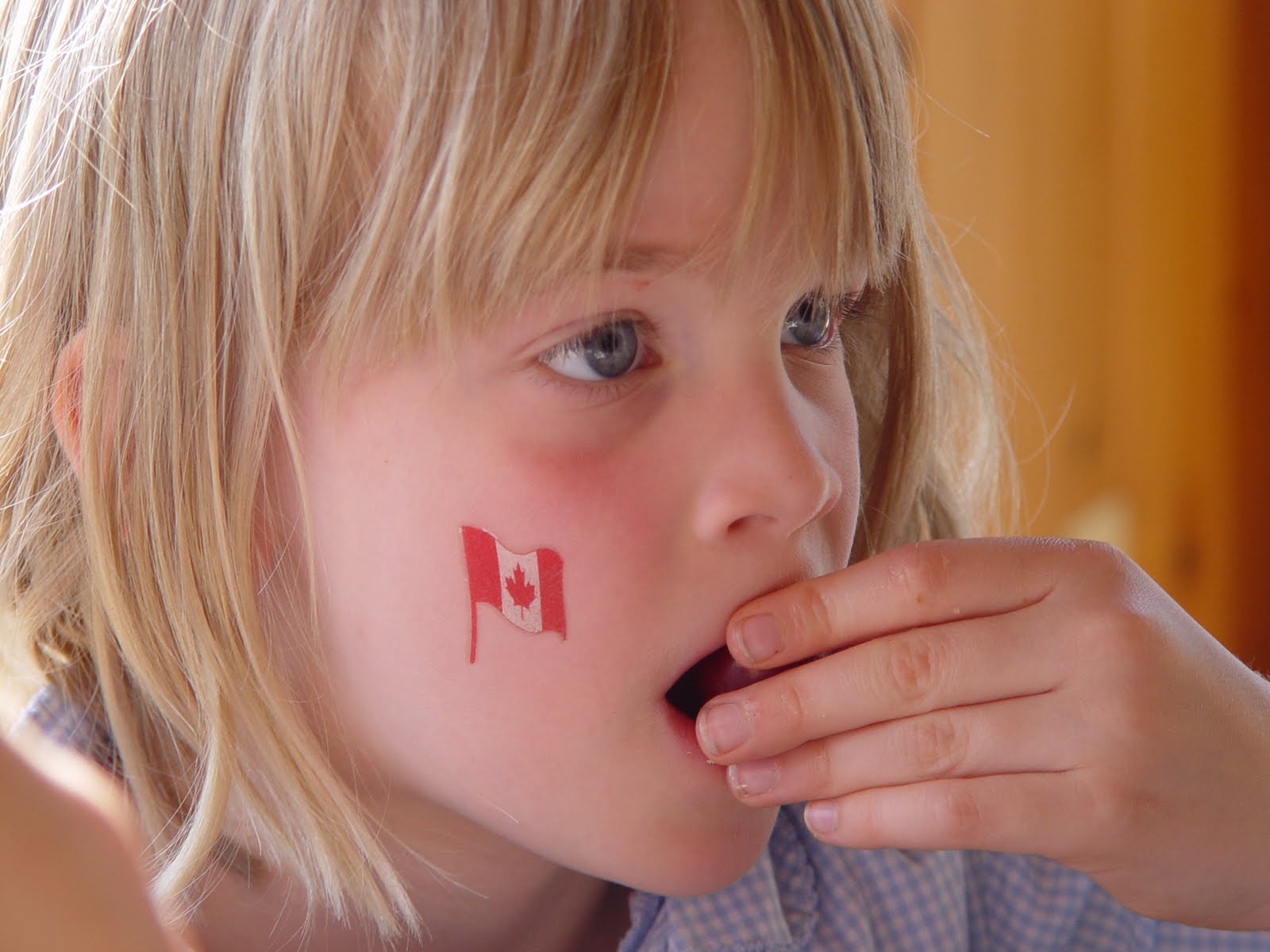
A. and E., both Canadians, got appropriate tattoos for Canada’s 143rd birthday.

Two other old good friends, one an immigrant who is now a citizen and the other who is a Canadian citizen by birth, invited us to barbecue burgers over on McNab’s, another very Canadian activity.

We couldn’t go to McNab’s, because we had already agreed to go to the wedding of two Canadians, one of whom is my brother.
There were many Canadian guests there, and it was a great solemnization and celebration, both serious and informal, punctuated with Canadian energy, humour, and enthusiasm.

We heard a most wonderful young Canadian violinist, the daughter of the groom, who played Saint-Saens exquisitely for her dad (and the rest of us who were privileged to witness the event).

We sang Feelin’ Groovy, a Canadian song, and a wonderful medley of Beatles songs, not Canadian in origin but rendered with Canadian sentiment and gusto.

We didn’t sing O Canada, but I think we were all proud to be Canadians (or almost Canadians) on Canada Day this year.